The Next Great Breakout: Why Pádel is More Than a Trend
I was recently invited to speak about the rise of pádel at the International Association of Pickleball and Pádel Facilities (IAPPF) event in Seattle, held at Side Out Tsunami—a stunning 26-court pickleball-only facility. Looking out at a facility that had every court occupied by happy picklers and an audience that was roughly 95% pickleball facility owners and vendors, I knew I had a dilemma: How was I going to describe the massive rise of pádel to an audience that is "all-in" on another racquet sport?
I wasn’t there to diss on pickleball; it’s a fantastic game, and ventures like Side Out Tsunami deserve every bit of credit for their success. But I have seen firsthand how pádel has become feverishly popular across Europe, Latin America, the Middle East, and Asia. And my own B2B venture, PadelPista, has already been involved in exciting club ventures from El Paso to Vancouver, and many places in between.
And that’s when it hit me like an overhand smash: padel is the next sushi.
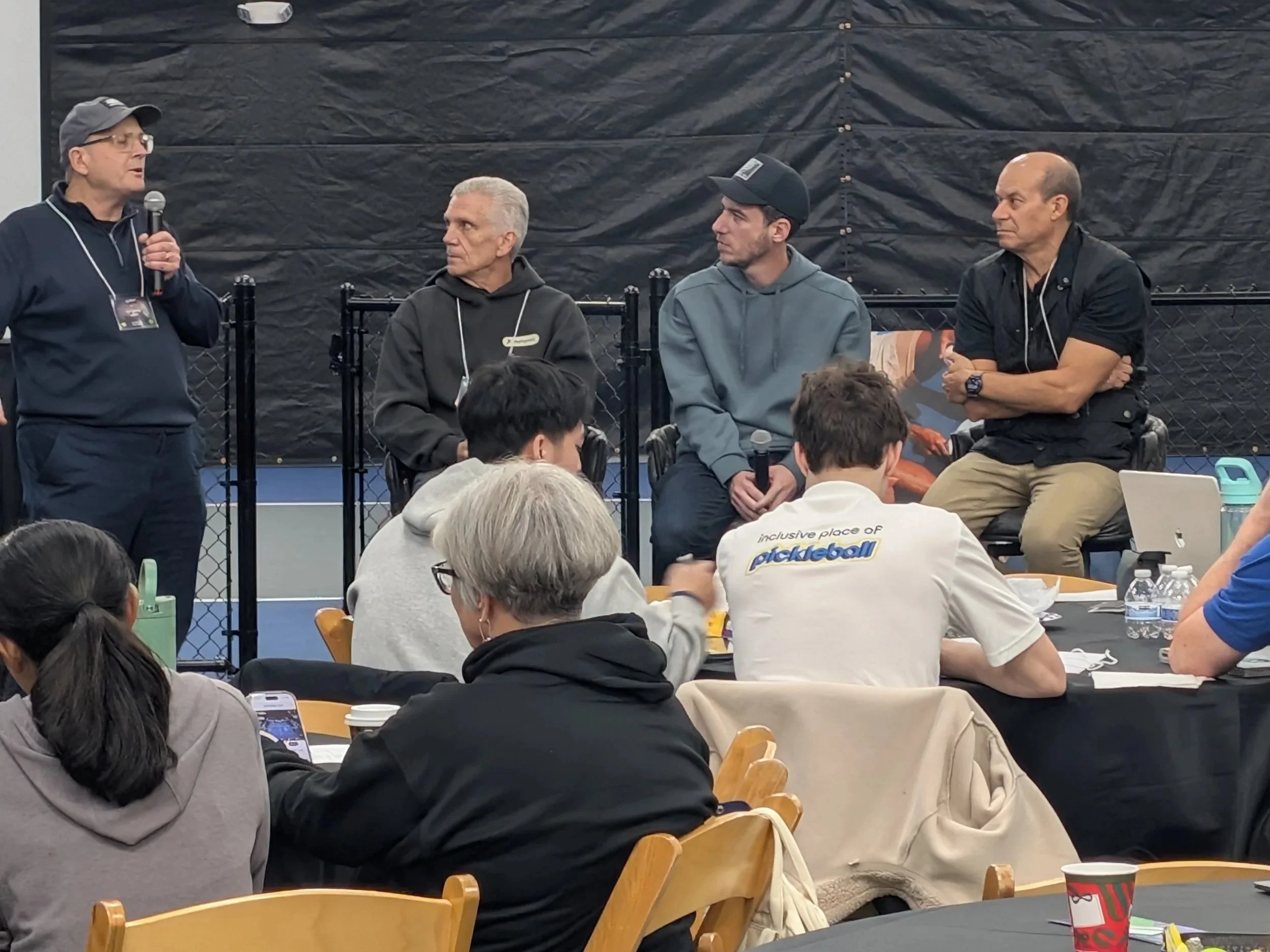
From left to right: Josh Kerns (IAPPF), Tom Konkowski (Conquer Padel), Pablo Arcuschin (Pacific Padel), Andres Snaider (PadelPista).
The Blueprint of a Cultural Phenomenon
I am of a certain age where I remember a time before sushi was a household name. Growing up working-class in LA in the 70s and 80s, I remember the "rich kids" talking about "sushi bars" where they ate raw fish on cold rice. It all seemed very weird then, and my friends and I agreed we wouldn’t ever try it.
Our resistance didn’t last. As sushi became more available, it became a "must-try" delicacy and, eventually, a mainstream staple. This trajectory offers a roadmap for where pádel is today:
• International Roots & Tradition: Both started as deep-seated cultural traditions brought to new shores.
• Celebrity & "Cool" Factor: Both initially gained traction as the "it" activity for the jet set. Today, that factor is amplified by global icons like David Beckham, Lionel Messi, Cristiano Ronaldo, and Rafael Nadal who have turned their personal passion for the sport into a global endorsement.
• The Lifestyle & Aesthetic Premium: Just as sushi introduced a specific "vibe" and aesthetic to dining, pádel brings a distinct culture of fashion, high-end equipment, and "chic" social clubs.
• The Shift to Mainstream: What began as an expensive, exclusive delicacy is now moving from trendy private clubs into every neighborhood.
The Global Tsunami
The rise of pádel in the U.S. is being accelerated by its role as a "Third Place"—an essential social anchor between home and work. While sushi hailed from one country, pádel is hitting our shores from everywhere at once—fueled by families and friends who have already fallen in love with the game everywhere from Mexico, the UK, Thailand, Dubai, and Morocco.
This is no longer just an international story. It is catching fire across the U.S. and gaining the approval of late-night TV hosts. We are seeing a shift where facilities are no longer just "gyms," but hubs featuring high-end hospitality and social lounges. Even figures like Drew Brees have recognized this wave, recently opening his own pickle and padel facility to meet this growing lifestyle demand.
Advice to the Racket Sport Industry
I asked the audience to imagine they weren't pickleball investors, but owners of a successful Japanese restaurant just as the first sushi bars were hitting Hollywood. What should they do?
1. Stick with the Classics: Stay with the "hibachi, teriyaki, and tempura" (the pickleball) that built your base.
2. Diversify the Menu: Keep the favorites but add the new "delicacy" of pádel to the mix.
3. The Pivot: Take the leap and open a dedicated "sushi-only" (pádel-only) spot.
There is no single "right" answer. All of these modalities can find success. But make no mistake: the wave is already here.